CERTIFICATIONS
Badges and CertificationsPARENTS ACCOUNT
Parents PortalCALENDAR
Annual Closure DatesHoliday Camps for Kids 2025: A Parent’s Guide to STEM, Coding & Robotics Camps in Singapore
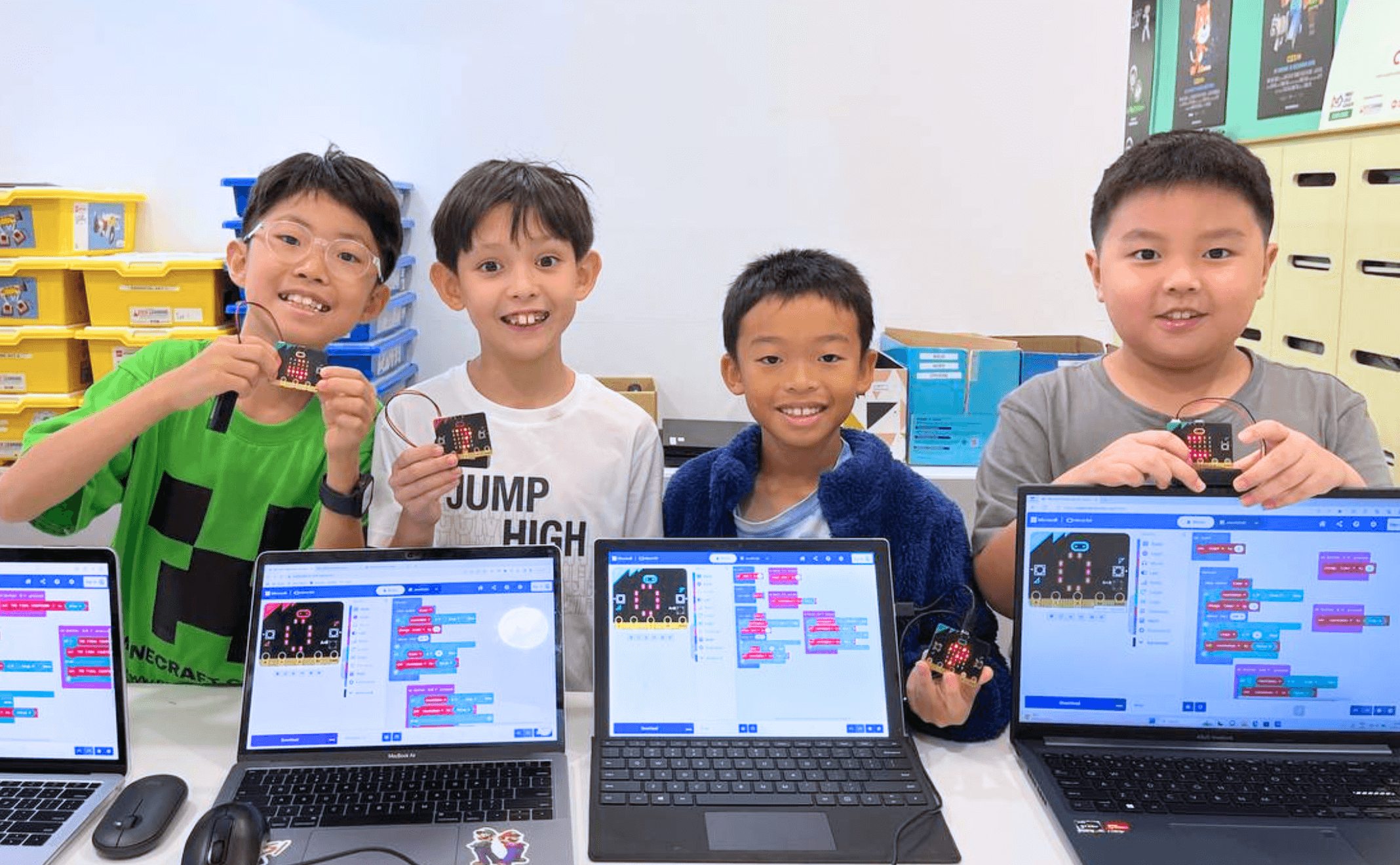
Choosing a holiday camp in Singapore can be difficult.
With so many choices – coding camps, robotics workshops, Minecraft Education classes, Roblox Lua programmes, Arduino electronics, 3D printing, design thinking – parents often ask:
Which holiday camp actually benefits my child?
Which programme builds real skills?
Which STEM Enrichment Centre offers proper learning and not just supervised screen time?
This guide breaks down the key types of STEM holiday camps available in Singapore today, explains what children really learn inside them and maps each area to Empire Code’s structured, age-appropriate curriculum.
Empire Code is consistently rated highly by parents for engagement, depth, safety and accessibility.
Benefits of STEM Holiday Camps
High-quality STEM camps do not aim to turn children into programmers in one week.
Instead, they use internationally recognised education frameworks – MIT Media Lab’s Constructionism, the CSTA K–12 Computer Science Standards and the Engineering Design Process – to build real cognitive and academic skills.
Below is a clear, research-aligned breakdown.
Design Thinking & Engineering Habits of Mind
STEM education teaches children to think like designers and engineers.
Through repeated cycles of imagining, planning, prototyping, testing, evaluating and refining, children develop stronger executive function, creativity and structured problem-solving.
Research from the National Academy of Sciences (2022) shows that this iterative process improves reasoning and long-term academic performance.
Computational Thinking (Logic, Sequencing, Pattern Recognition)
Every coding or robotics task strengthens computational thinking, the same core skills needed for mathematics, science and analytical writing.
Studies from MIT, Carnegie Mellon and the University of Chicago show improvements in:
LEGO Education SPIKE bring together:
● decomposition
● pattern recognition
● sequencing
● cause-and-effect reasoning
● abstraction and generalisation
Children who build these skills early often excel academically across subjects.
Confidence, Persistence & Managing Complexity
Debugging code, adjusting robot movement and refining a game design are all forms of productive struggle.
This builds:
● confidence
● resilience
● frustration tolerance
● critical thinking
● independence
● ownership of learning
These qualities support learning far beyond STEM.
Hands-On, Multi-Sensory Learning (For All Learning Styles)
STEM is naturally hands-on. Children build, code, modify, analyse, design, test and present.
This active approach aligns with research by Piaget, Vygotsky and Papert showing children learn best through construction, not passive memorisation.
Tools like LEGO Spike, Arduino, Micro:bit and Scratch create safe environments for exploration and experimentation.
Staying Mentally Engaged During the Holidays
Long school breaks can lead to learning loss.
Structured STEM camps keep children intellectually engaged, but through play, creativity and project-based tasks rather than worksheets.
The result is a holiday experience that balances fun, discovery and meaningful learning.
A Unique Twist: Themes Kids Already Love (Labubu, Pokémon & More)
Engagement is often the reason children learn effectively.
Empire Code integrates popular, child-favourite themes directly into its curriculum to make STEM feel natural and exciting.
Examples include:
● Labubu-inspired design challenges
● Pokémon-themed robotics missions
● Scratch and Minecraft projects built around trending characters
These are not simple add-ons. They are embedded directly into learning outcomes:
● A Labubu-inspired task becomes a sequencing or logic challenge
● A Pokémon-style mission becomes a robotics task involving sensors
● A trending story becomes the foundation for a Scratch animation or game
When the content feels relevant, children persist longer and absorb concepts more deeply.
Partnership Themes With Real Brands (Sakae Sushi, Edith Patisserie & More)
Empire Code partners with well-known brands to bring STEM concepts into real-life cultural and design contexts.
Sakae Sushi
Children explored:
● sushi-train automation
● digital menu design
● coding a “future sushi restaurant” in Minecraft Education
Edith Patisserie
Learners applied coding and robotics to:
● designing patterns
● applying colour harmony
● sequencing challenges
● creative problem-solving
These partnerships help children understand how STEM connects to restaurants, design, retail and everyday experiences.
What Kids Learn at Each Age (Empire Code Curriculum)
Empire Code structures its holiday camps according to developmental readiness.
Preschoolers (Ages 4–6)
● introductory robotics
● early block-based coding
● pre-coding logic
● sequencing tasks
● hands-on building
● sensory-based STEM exploration
Lower Primary (Ages 7–9)
● LEGO Spike Essentials
● Scratch animation & game design
● Minecraft Education coding
● Micro:bit science & engineering
Upper Primary (Ages 10–12)
● LEGO Spike Prime
● Scratch coding with math integration
● Roblox Lua & Minecraft bootcamps
● 3D design & 3D printing
● Introductory Arduino (circuits and sensors)
Teenagers (Ages 13–16+)
● Python, JavaScript & advanced coding
● Unity game development
● Arduino engineering
● IoT-style projects
● 3D modelling for portfolios
● Advanced robotics & automation
Scratch vs Python vs Arduino vs Robotics: Choosing the Right Starting Point
Scratch (Ages 7–10)
Best for beginners and visual thinkers. Supports creativity, storytelling and logic fundamentals.
Python (Ages 10–16)
Best for students who enjoy puzzles, math or structure. Introduces text-based coding and algorithmic thinking.
Arduino (Ages 11–16)
Great for hands-on learners. Teaches circuits, wiring, sensors and hardware logic.
Robotics (Ages 5–14)
Ideal for builders and tinkerers. Strengthens spatial reasoning, mechanical thinking and teamwork.
What Actually Happens Inside Each Type of STEM Camp
Minecraft Coding Camps
Children learn automation, logic, sequencing and collaboration through Minecraft Education. They build structures, program agents and solve engineering challenges.
Roblox Lua Coding Camps
Learners use Roblox Studio to code in Lua, design 3D worlds, apply physics and build playable games. This introduces real coding and problem-solving.
LEGO Robotics Camps
Students design robots, integrate sensors, debug code and complete engineering missions. This develops the full engineering design cycle.
Scratch Coding Camps
Children create characters, animations and games. They learn sequencing, events, loops, debugging and storytelling.
Python Coding Camps
Older learners write real programs, solve logic puzzles and build small applications. They learn variables, loops, functions, conditionals and algorithmic thinking.
Arduino Engineering Camps
Students build circuits, wire sensors, control hardware and learn electronics engineering used in automation and IoT.
Easy and Accessible Locations
Empire Code operates two centrally located, MRT-connected campuses:
● River Valley (Mohamed Sultan Road)
● Novena (Goldhill Plaza)
Convenient for working parents and families coordinating multiple schedules.
Frequently Asked Questions
Are these camps suitable for beginners?
Yes, all camps assume zero experience.
Will Minecraft or Roblox feel like gaming?
No – they are used in structured, education-focused formats.
Is robotics suitable for young children?
Yes. LEGO robotics is designed for ages 5–12.
Which programmes help with DSA?
Python, Arduino, Robotics, Game Development and Roblox Lua.
Do children need to bring devices?
No, all equipment is provided.
Final Thoughts for Parents
A strong STEM holiday camp offers more than coding or robotics.
It builds confidence, curiosity, persistence and creativity, traits that shape a child’s approach to learning far beyond the holiday period.
Empire Code’s approach combines pedagogy, fun themes, real-world partnerships and accessible locations.
Whether your child enjoys characters, robots, puzzles, design or engineering, there is a STEM pathway that fits.
This guide should help you choose a camp that keeps your child excited and strengthens the skills they’ll bring back to school and into the future.
Register for a Free Trial Coding or Robotics Class
Empire Code offers trial coding and robotics classes for children aged 4 to 16, taught by MOE-registered and carefully selected educators who support early and primary learners with clarity, structure and genuine care. Please complete the form below and our team will be in touch with you shortly.
*By submitting the form, you agree to our Terms and Conditions
Google Reviews
Posted on Google
 Rachel Chen13 October 2026
 Thank you so much for the wonderful programme! My boy came home so happy and excited, and he immediately opened Minecraft to put what he had learned into practice! 😊 We truly appreciate all the effort, thoughtful arrangements, and especially the teachers’ patience and care. It has been such a wonderful and valuable learning experience for him. We really hope you’ll organise more programmes like this in the future! We feel so lucky to have had this opportunity. Thank you once again for everything! ❤️Posted on Google
 Michelle Tan22 September 2026My son has been attending Empire AI for two years and completed a few modules. Even though he has been trying different things, he still enjoys every lesson that he attends! The trainers are nice and friendly, and provide regular updates on the child’s progress. I also like that the centre organises special events with special themes once in a while as well as during the school holidays. Highly recommend!Posted on Google
 YewHock TAN31 August 2026Interesting topics which are practicle and useful for beginners. Additional Course on 29th Aug 2026 The AI course on Bazi by Empire.AI was a wonderful eye opener! I also learn a lot about NotebookLM, and was able to generate ppt slides, video in both English and Chinese, and last but not the least, an interview audio file on the project. The co-organiser, Ningpo Guild, was very hospitable, too!Posted on Google
 LC Liu29 August 2026Very good course for beginners. Zheng Xuan is a very patient teacherPosted on Google
 Jonathen Chen29 August 2026Trainer Zheng Xuan able to share with interesting topics using AI to build & enhance our life time experiencesPosted on Google
 Phillip Tan29 August 2026Good contentPosted on Google
 Florence Ang29 August 2026Learnt something new today about AI! Great job!Posted on Google
 Peifang Tang24 August 2026I had learnt there as a trail and really enjoyed itPosted on Google
 Foo Loy Yong22 August 2026I learnt a lot therePosted on Google
 david chan1 August 2026Mr Low Z X did a very gd presentation. Enjoy the lively moment. Well done. Thank youPosted on Google
 Yuna Bong2 July 2026I would just like to share this gem of a place that's tucked away in Goldhill Plaza - it's affordable (VERY value for money), has great instructors, clean and cosy, and does an excellent job in developing robotics/coding/building skills in children. I was first introduced to this place by a good friend, and after the first class, my 5 year old was instantly sold! I love that young children get the chance to build their own structures (great for fine-motor skills), learn simple block coding, and test out their creations on the spot. I also appreciate the fact that they are very flexible - there are many learning pathways and we can choose which suits our child best. The centre gives great recommendations to suit each child's needs, and there are a variety of modules available - we are simply spoilt for choice! Replies and updates are also very prompt - there are photos/videos of my child every lesson, and all questions are promptly replied via WhatsApp. Those looking for a great place for their children to try out coding/robotics/building etc should definitely give this centre a try. :)Posted on Google
 KA Group Asia29 May 2026The staff here are incredibly kind and professional. My kids have been attending classes for Minecraft Education and Scratch, and they are always engaged and excited to return. The curriculum is fun, effective, and truly sparks their interest in coding. I highly recommend Empire AI to any parent looking for a great enrichment center!Posted on Google
 Mehraj Begum28 May 2026My children are going through the exposure modules. Their experience is amazing. The teachers are very patient and explained the steps clearly. They also provided a wide exposure to many different coding experiences and platforms which allows parents to discover our child’s strengths and niche. Teachers are motivating and cheerful. Their belief in gender equality in the domain of STEM is truly inspirational. Empire code also partners with Social Enterprises which teach children empathy and their contribution towards helping the needy. Thank you Empire Code!Posted on Google
 QYL Ho19 May 2026We would like to thank Empire Code for the engaging and interesting robotics lessons. My son has been thoroughly enjoying every class and always looks forward to attending. The teachers make learning fun, interactive, and encouraging, which has helped spark his interest in robotics and coding. We truly appreciate the patience, dedication, and positive learning environment provided. Thank you for making the classes such an enjoyable experience for him!Posted on Google
 Emma7 May 2026My kids attend Empire AI Novena and we’ve had an amazing experience so far! The teachers are caring, patient, and truly passionate about teaching. Special shoutout to Teacher Aaron for being so encouraging and supportive with the students The curriculum is well-designed, engaging, and helps children learn AI and tech concepts in a fun and meaningful way. My kids always look forward to class and have gained so much confidence and knowledge. Highly recommend Empire AI Novena to parents looking for a great learning environment for their children!!Posted on Google
 Ray Tio25 April 2026My Son is on his 3rd Module and almost 40hrs of online lessons. He is always looking forward to his weekly class and enjoys the lessons. We had never been to the school before and everything were coordinated through WhatsApp. Everything is just 1 text away. I just signed up for another 30hrs of lessons before writing this. Remember to check for promotions!Posted on Google
 User10 April 2026Very funPosted on Google
 spoiled Milk10 April 2026Incredible experience here. As the teacher not only are very kind, but they are friendly to our needs and I learnt a lot thanks to their patience and kindness. Especially teacher ZX who is good😀.Posted on Google
 Francis Chong26 February 2026Lovely education centre that I send my son to for coding. He absolutely loves it. The teachers are passionate, education is solid, awesome and fun; not to mention that they have wonderful founders and supporting staff as well. Prices are reasonable too! Can't ask for more la. The above is not AI generated ;)Posted on Google
 Ed24 February 2026A lovely place to learn Robotics! My boy has enjoyed his sessions and facilitators are patient and knowledgeable 😍🙏🏼 thx!Posted on Google
 xiaoyan wang30 January 2026My son enjoys this course very much . We have been traveling here during the vacation and join the classes .Posted on Google
 A28 January 2026My child loves his lessons at Empire Code. The instructors are knowledgeable, helpful, kind and very encouraging. He has learnt a lot in his robotics classes. wPosted on Google
 Nelson Loh26 January 2026I asked my P3 boy which enrichment he may want to drop since he has too 5 on hands… he replied, definitely not Empire coding! It is fun & educational, he loves it very much :)Posted on Google
 はるあお19 January 2026We had a wonderful experience at this Minecraft coding class in Singapore. When we shared our concerns about our children not understanding English, the school kindly adjusted the schedule and arranged more individualized support for them. Although my two children did not understand much English at first, the teachers patiently and warmly supported them throughout the lesson. They stayed close to the children, helped them stay focused, and guided them using the children’s interests, which made learning in English enjoyable and positive. We are traveling from Japan, and being able to include this programming class during our trip was truly valuable. We were very impressed by the high level of coding and STEAM education in Singapore. The administrator was also very kind and friendly, and it is clear that this school has experienced and excellent teachers. We are truly grateful for this experience and highly recommend this school.Posted on Google
 dw dw18 January 2026My child really enjoyed the coding classes at Empire Code, especially the LEGO Robotics and Scratch Junior programmes. The lessons are engaging and well-structured, making learning fun and hands-on. The Novena location is very convenient, and the open house was useful for letting us try out the classes before enrolling. Overall, a great learning experience for young learners.Posted on Google
 Kheng Zx17 January 2026My kids is quite happy and enjoy the classPosted on Google
 paul yun17 January 2026Our kids tried the first lesson at Empire code and likes very much. We believe it will be good for him to learn the coding robotics at early age. We recommend the Empire code.Posted on Google
 Janice Tan16 January 2026My child has been attending this robotics class for almost two years, starting from when he was 4 years old, and he has never missed a class. He looks forward to it every week and is always very excited after class to show me what he has built. He is especially proud of toggling between different commands to make the robot perform different actions. We’re really glad we found this place, and he has truly enjoyed learning here. I would definitely recommend it to friends who are looking for a robotics class for their kids.Posted on Google
 Silver wolf31 December 2025Minecraft is so funPosted on Google
 HH Bay11 December 2025Empire Code Novena offers a Roblox course that teaches kids real coding concepts instead of just playing games. Through guided lessons, students learn to design their own worlds, scripts, and game mechanics. This helps them understand logic, creativity, and problem-solving in a fun, hands-on way. Parents appreciate that screen time becomes productive as children build and create rather than only consume. Overall, the course turns gaming interest into valuable digital skills for the future.Posted on Google
 Jeanne Chin2 December 2025Empire code was a perfect place for my child's learning of robotics and coding. The teachers were wonderful and my child always come home excited about what he learnt. I like that the classes go by credits and lessons are flexible for me to switch around when our schedule changes. Felicia has been super helpful and patient in guiding us through the DSA roadmaps when applying for sec schs.Posted on Google
 Martin15 November 2025Good learning environment with friendly stuff and trainer. Recommend to parents with children interested in coding class.Posted on Google
 silly dinny15 November 2025We just want to thank the trainer today for being so kind and patient with our boy. He wanted to show me his robot at the end of class but somehow it didn't work after a few tries due to our tablet's issue. Although it took extra time to help him reconnect with another ipad (he was the last kid to leave), she was extremely helpful and patient. Your reception staff was also very gentle and friendly to our kids. In fact, week after week, the trainers and reception staff have shown so much care and patience towards him and his brother. We truly appreciate it and our kids love coming here every week for class! 🙏Posted on Google
 Marc Wong6 November 2025I really appreciate how patient the teachers are and how the education team regularly updates the curriculum. It keeps the learning experience fresh, engaging and relevant for the kids.Posted on Google
 Pauline Huang30 September 2025My son had a wonderful time celebrating his birthday at Empire Code with his classmate. Thanks to Empire Code to set up all the decoration and conduct the fun coding class according to my son's favourite character which is Pokemon. He and his friends were enjoying creating their own pikachu and learnt how to do coding with it. After that we had our party meal and also cutting birthday cake. Thanks to Empire Code to make my son's birthday unforgettable!Posted on Google
 Linda Lim20 September 2025My child recently attended the MineCraft Code and Cake Workshop and it was an excellent experience from start to finish. The program was well-organized, engaging, and provided the right balance between learning and fun. More importantly, my son came back talking happily about what a great experience he had. The added bonus is that it is a 1 day workshop including lunch on a Saturday, which save a lot of logistic issues and a meaningful way to spend a weekend.Posted on Google
 Adelia Seng18 August 2025My son has been attending robotics classes at Empire Code Novena, and has been having a fantastic time there. He's not only learning valuable skills in robotics, but have also been introduced to foundational coding concepts and having a ton of fun. The instructor is great at keeping the kids engaged and making complex topics easy to understand. We've seen a noticeable boost in his confidence and problem-solving abilities since he started. We highly recommend this class to any parent looking for a fun and educational activity for their child!Posted on Google
 Ly15 August 2025My child has been at Empire Code for many good long years now, it has become one happy place of fun learning, exploring and confidence. The Coaches are Champions! Empire Code support competence and the partnership maintained with parents is noteworthy.Posted on Google
 Ria Chee13 August 2025My son just finished the LEGO Spike 1 Robotics class and absolutely loved it! The lessons were fun, hands-on, and taught him so much about building, coding, and problem-solving. The instructors were fantastic, the admin team was very helpful, and every staff member was friendly. He’s now moving on to LEGO Spike 2 and is so excited to join the competition next year when he’s ready. My mommy friends have even started joining and inquiring after seeing how much he enjoyed it. I highly recommend EMPIRE CODE Novena.Posted on Google
 Stepyi11 Y2 August 2025My kid loves this coding class, he is looking forward to each session.Posted on Google
 ados31 July 2025The instructors are patient, knowledgeable, and make learning fun. It’s a very professional program,we’ll definitely keep coming back!Posted on Google
 Cec22 July 2025Flexible in class arrangements and willingness to based on child’s ability. In-charge is hands on, and working in constant improvement. If looking for coding and robotic school, can check them out!Posted on Google
 Jane Tan22 July 2025My son has been with Empire Code for a few years. He enjoyed each class and have learnt many new applications such as scratch, minecraft, roblox. The instructors are patient and the customer service is very prompt in updating and responding to us.Posted on Google
 Ying Chen21 July 2025Empire Code is a fantastic training centre that inspires children’s interest in coding. We first discovered it when my son saw their advertisement. He was interested, so I enrolled him in a holiday programme. Since then, he has continued with Scratch, Python, and other courses there. He is very enthusiastic and looks forward to going every weekend. The teachers are caring, experienced, and very considerate. We are truly grateful for their dedication.Posted on Google
 Hosiana Hosiana20 July 2025Our 7-year-old son has really enjoyed his time at Empire Code Novena. He took LEGO Robotics and ScratchJr coding classes, and it's been a great way to introduce him to the world of tech. Every lesson is hands-on and fun - he comes home excited to show us what he's built or coded. The trainers are great with kids and really know how to keep them engaged. The Novena center is clean, safe and well set up for young leaners. It's not easy to find coding and robotics classes for young kids in Singapore that strike the right balance between fun and learning - but Empire Code does just that. Would definitely recommend it to any parent looking to give their child a strong start in tech!Posted on Google
 hanna lee18 July 2025I was initially unsure about online coding classes, but Empire Code completely changed my mind. My son had a blast with their Minecraft coding course on Zoom, and I loved seeing how engaged he was from the very first session. What stood out to me most was how the lessons sparked his creativity while teaching him real coding logic through a platform he already loves - Minecraft! He wasn’t just playing; he was learning and building with purpose. The trainer was so warm and encouraging - even over Zoom, she managed to connect with the kids and guide them patiently. As a parent, I appreciated how organised the sessions were and how much my son looked forward to them each week. If you're looking for online coding classes for kids in Singapore that are meaningful, fun, and educational, Empire Code is a wonderful choice.Posted on Google
 Zixiang Fu18 July 2025This is a coding and robotics centre for young children and they are fantastic. My son is attending coding classes here and the teachers are knowledgeable, attentive and caring. My son came home happy after every session and has been constantly sharing with me what he has learnt at Empire Code. Glad we found a centre that takes care of his learning while making it fun to learn.Posted on Google
 Joan Hamilton16 July 2025This is a thrilling place for kids! Empire Code’s material is leveled but challenging. It has even prepared my kids well for math competitions at their school (as they often include questions on coding), but my kids only see it as fun! The instructors are great and management is very organized and professional. Their camps are always a highlight of my boys’ summer. We have also held a party at Empire Code to rave reviews from our birthday boy and all of his friends! Highly recommend!Posted on Google
 kinghee teo12 July 2025My children enjoyed the classes at Empire Code immensely and have taken up an interest in coding. The instructors are friendly and patient with young children.Posted on Google
 Tim Q12 July 2025Great place for kids to learn coding and robotics! My kids love it and don’t want to go home!
