CERTIFICATIONS
Badges and CertificationsPARENTS ACCOUNT
Parents PortalCALENDAR
Annual Closure DatesWill Learning Coding Help My Child with Direct School Admission (DSA)?
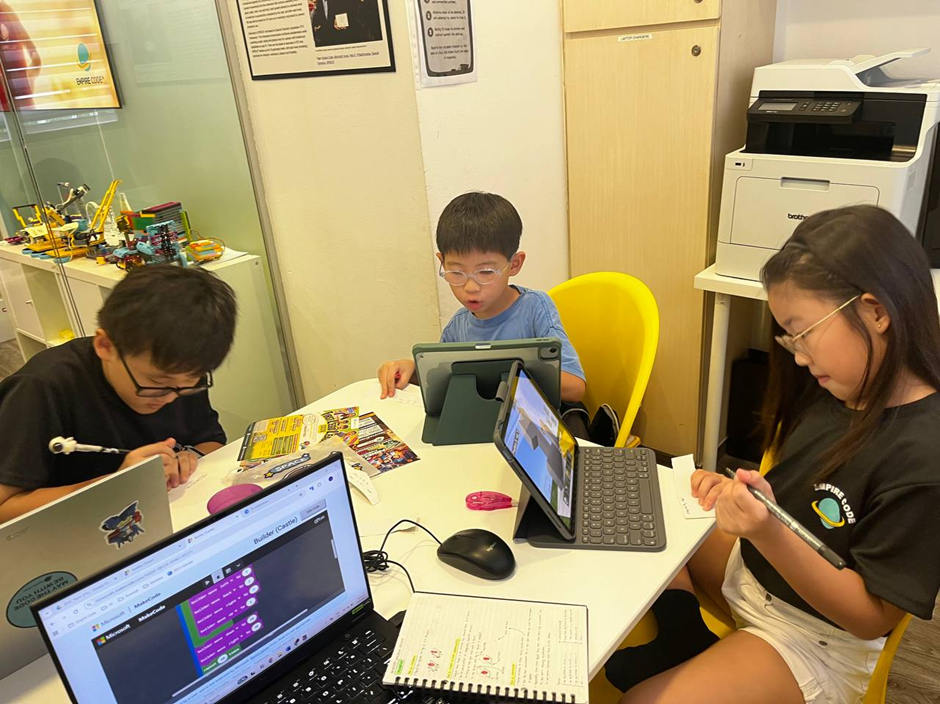
For many Singapore parents, DSA planning quietly begins earlier than Primary 6.
Not because they are chasing prestige – but because they want options.
With more secondary schools opening STEM-related talent pathways, coding has naturally entered the conversation.
So the practical question becomes:
Will learning coding help my child with DSA?
In today’s context, very often the answer is yes – but only when it is approached strategically.
What exactly does DSA do for my child?
The Direct School Admission pathway by the Ministry of Education allows students to apply to secondary schools based on specific talents before PSLE results are released.
This means:
● Two possible entry pathways instead of one
● Talent recognition beyond exam scores
● Conditional offers before PSLE results
For many parents, the real benefit is not status. It reduces dependency on a single exam. That psychological safety matters.
How Does Coding Fit into DSA Talent Areas?
Many secondary schools now recognise coding and related tech skills as legitimate DSA talent areas.
These categories vary, but often include:
● Coding
● Computational Thinking
● Robotics
● Design, Technology and Engineering
● Programming and 3D Modelling
● STEM or STEAM
Even when “coding” is not explicitly stated, programming is frequently embedded within robotics, engineering and innovation tracks.
Coding therefore functions as a foundation skill that supports multiple DSA pathways – not just one narrow category.
It increases optionality.
Which Secondary Schools Offer DSA in Coding, Robotics or STEM?
Several well-known schools offer STEM or technology-focused DSA tracks, including:
● St. Joseph’s Institution – STEM: Coding, Robotics, Programming and 3D Modelling
● National Junior College – STEM: Engineering Innovation and Solutions
● Hwa Chong Institution – STEM: Infocomm
● School of Science and Technology – STEAM
● Anglo-Chinese School (Independent) – Robotics
● Anglo-Chinese School (Barker Road) – Robotics
● Methodist Girls’ School – STEM
● Singapore Chinese Girls’ School – STEM
Each school structures its categories differently, but many assess:
● Problem-solving ability
● Technical application
● Innovation mindset
● Communication skills
Coding directly supports all four.
Understanding the Numbers: Is STEM DSA Too Competitive?
Here’s what recent data shows:
2023
● 38,000 applications by about 14,500 P6 students
● About 25% were STEM-related
● 8,000 DSA places available
● 4,400 students admitted
● Approximately 45 percent of DSA places remained unfilled
2024
● 42,500 applications by about 16,000 P6 students
● About 20% were STEM-related
Two important insights emerge:
1. STEM DSA is competitive because many students apply.
2. A significant number of DSA places remain unfilled each year.
This suggests success is less about applying everywhere, and more about alignment.
When a child’s strengths genuinely match the school’s expectations, probability improves significantly.
Coding strengthens that alignment in STEM categories.
What Do Schools Actually Look For in DSA Applicants?
Parents sometimes assume DSA coding means advanced programming.
In reality, schools usually assess broader competencies:
● Logical reasoning
● Structured thinking
● Ability to build and test ideas
● Evidence of sustained interest
● Ability to explain their thinking clearly
Students may be asked to:
● Complete logic assessments
● Solve simple programming challenges
● Perform robotics tasks
● Present projects they have built
Children with genuine coding experience are familiar with this environment.
They are less intimidated and more confident.
Confidence under evaluation is a major differentiator.
Does Coding Training Really Make a Difference for DSA?
When done properly, coding training supports DSA in five practical ways:
1. Builds Computational Thinking:
Children learn to break down complex problems step by step.
2. Strengthens Robotics and Engineering Skills:
Most robotics competitions require programming to control systems.
3. Builds Portfolio Assets:
Games, apps, simulations and smart devices become tangible evidence during interviews.
4. Improves Interview Communication:
Students who built their own projects can explain decisions clearly.
5. Develops Persistence:
Debugging builds resilience – something schools quietly value. These are developmental benefits, not just admission tactics.
But Not All Coding Classes Prepare for DSA
This is where many parents misunderstand.
If a child copies code line by line without understanding it, the output may look impressive – but comprehension is shallow.
During DSA trials, panels quickly detect whether a child:
● Understands why something works
● Can troubleshoot independently
● Can adapt ideas
● Can articulate reasoning
For DSA, depth matters far more than flashy results.
When evaluating programmes, look for:
● Emphasis on logical thinking
● Original project building
● Iteration and improvement
● Communication training
● Real problem-solving
The goal is not just to run code.
It is to think through problems.
So, Should Your Child Learn Coding for DSA?
If your child:
● Enjoys building
● Shows curiosity about how things work
● Responds positively to technical challenges
● Demonstrates sustained interest
Then coding gives them a strong strategic advantage across multiple Tech-related DSA categories.
More importantly, it teaches them that strengths can be developed into opportunity.
That mindset compounds far beyond secondary school.
A Final Reframe
DSA is not about chasing elite schools. It is about building structured optionality. PSLE measures performance in one fixed window. DSA measures growth over time.
If your child is already investing time in coding and robotics, the real question becomes:
Are we building casually, or are we building strategically?
If you would like clarity on where your child stands and whether a DSA pathway is realistic, speak to us early. Planning earlier reduces pressure later.
Experience a Trial Lesson
Empire Code offers trial coding and robotics classes for children aged 4 to 16, taught by MOE-registered and carefully selected educators who support early and primary learners with clarity, structure and genuine care. Please complete the form below and our team will be in touch with you shortly.
*By submitting the form, you agree to our Terms and Conditions